View From Above: Hot Air Balloon Safari in Akagera National Park
We entered the fenced Akagera National Park at six in the morning, the sky just beginning to blush with the soft light of dawn. There was a quiet buzz in the air, part anticipation and part reverence, as we made our way to the launch site in the southern part of the park. The drive itself felt like a prelude to adventure, winding through the park's gravel paths while birds called out from the canopy and antelope tracks crisscrossed the roadside.
As soon as we arrived, we were greeted with freshly brewed coffee and a front-row view of something truly magical. The crew from Royal Balloon Rwanda was already at work, unfolding massive fabric envelopes and igniting burners that sent flames roaring into the balloon mouths. The inflating exercise was a captivating dance of fire, air, and motion, offering an opportunity to learn the science behind the world's oldest manned flight mechanism.
Soon, the balloons stood tall and full against the brightening sky, like giant sentinels waiting to ascend. I climbed into one of the gondolas, also known as a wicker basket, skillfully woven and cleverly partitioned to accommodate the pilot, propane tanks, and a few passengers. I shared the space with three American tourists, including the daughter of the legendary balloonist Matt Wiederkehr.
As the burners hissed and the basket lifted, we were gently pulled away from the earth. The sensation of rising into the sky, slow, smooth, and surreal, was unlike anything I had ever experienced. The warmth of the air around us contrasted with the cool morning breeze, and soon we were floating above the sprawling savannah of Akagera.
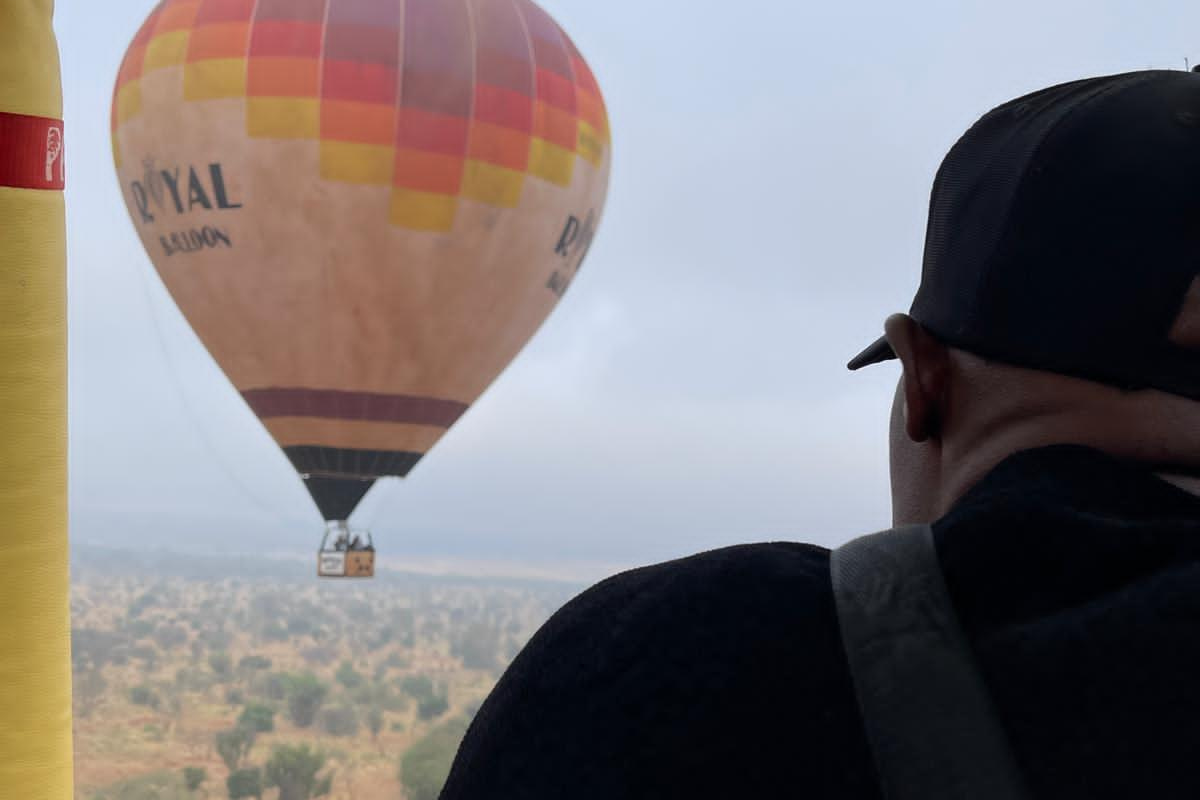
The sensation of rising into the sky, slow, smooth, and surreal, was unlike anything I had ever experienced.
Below, wild animals moved across the landscape. Elephants, antelopes, and zebras all seemed unaware of the spectacle above. It was a breathtaking sight, made even more surreal when tourists on game drives slowed down to snap photos of us as we soared overhead. The second balloon floated nearby. We waved at its passengers and they waved back, their faces lit up with the same wide-eyed wonder.
From above, the landscape unfolded like a living canvas. Lakes glistened in the morning light, golden plains stretched endlessly into the distance, winding trails threaded through the savannah, and the occasional silhouette of a giraffe moved gracefully below.
Balloon flights follow the whims of the wind. Though they typically last about an hour, our journey was cut short when the breeze nudged us toward the edge of the permitted flying zone. For a moment, I silently wished for the power to shift the wind's course. But our pilots had something better in mind: an unexpected bonus in the form of a tethered ride after landing. We rose once more, this time anchored to the earth, savoring the final moments of elevation without drifting toward crocodile-infested Lake Ihema.
Suspended just above the ground, we floated gently in place, long enough to take in the sweeping views once more, snap a few final photographs, and allow the magic of flight to linger a little longer.
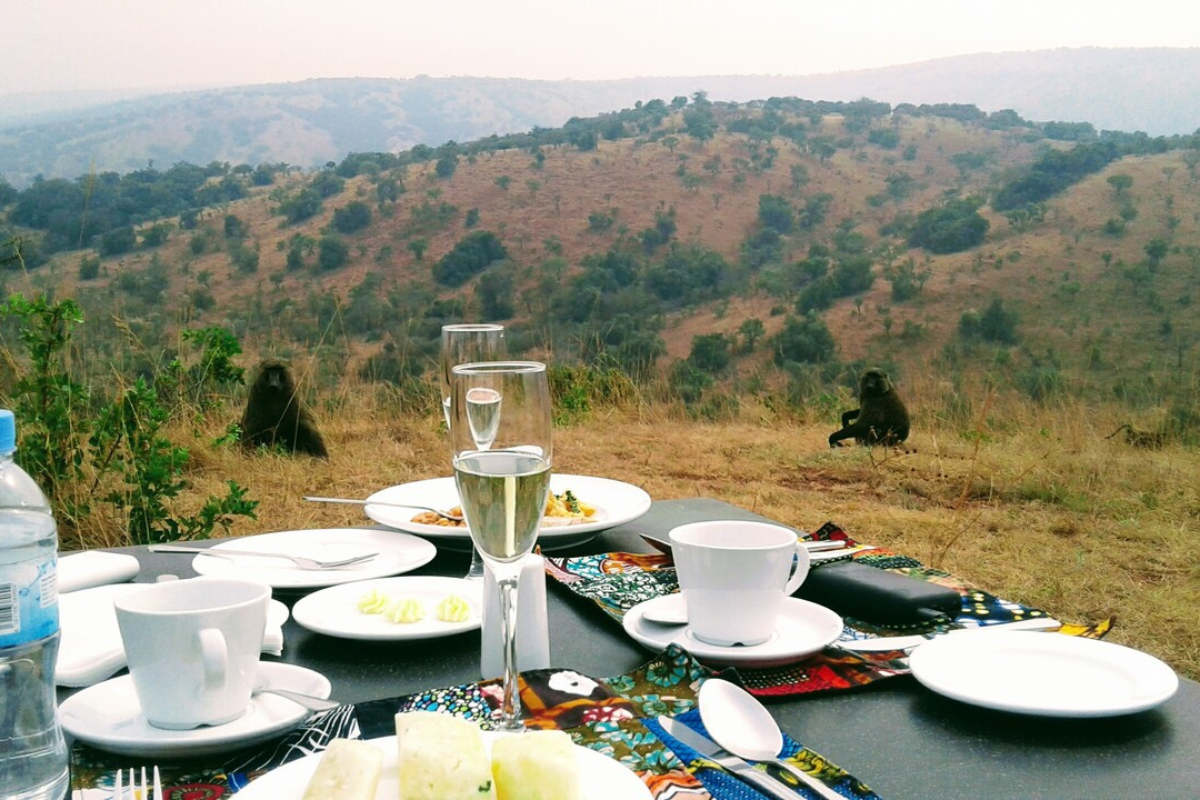
This unforgettable adventure was capped by a champagne-toasting landing ceremony, followed by a bush breakfast.
Touching down brought another highlight: the traditional champagne-toasting ceremony. This long-standing ballooning ritual dates back to the 1780s, when French balloon pioneers Jean-François Pilâtre de Rozier and François Laurent d'Arlandes celebrated their historic 1783 flight with a bottle of champagne. In those early days, landing in unfamiliar places often sparked fear among villagers who mistook the balloons for strange visitors from another world. Champagne became a peace offering, a symbol of goodwill and reassurance.
Centuries later, the tradition lives on. We raised our glasses in a toast, still buzzing from the thrill of the ride, then sat down for breakfast in the bush, a perfect closing chapter to an already unforgettable morning.
But the wilderness had one final surprise. Our breakfast spread attracted a few curious onlookers. Monkeys and baboons watched from nearby, their eyes fixed on the feast. Park rules prohibit feeding wildlife, so we resisted the temptation, even as one baboon gave me a look that clearly said, "Don't be greedy." I couldn't help but laugh and feel just a little guilty.
From lift-off to landing, every moment of that morning was stitched together with wonder, science, history, and a touch of cheeky wildlife humor. It was not just a balloon ride. It was a journey into the sky, into the past, and into a memory that will remain aloft in my heart for years to come.
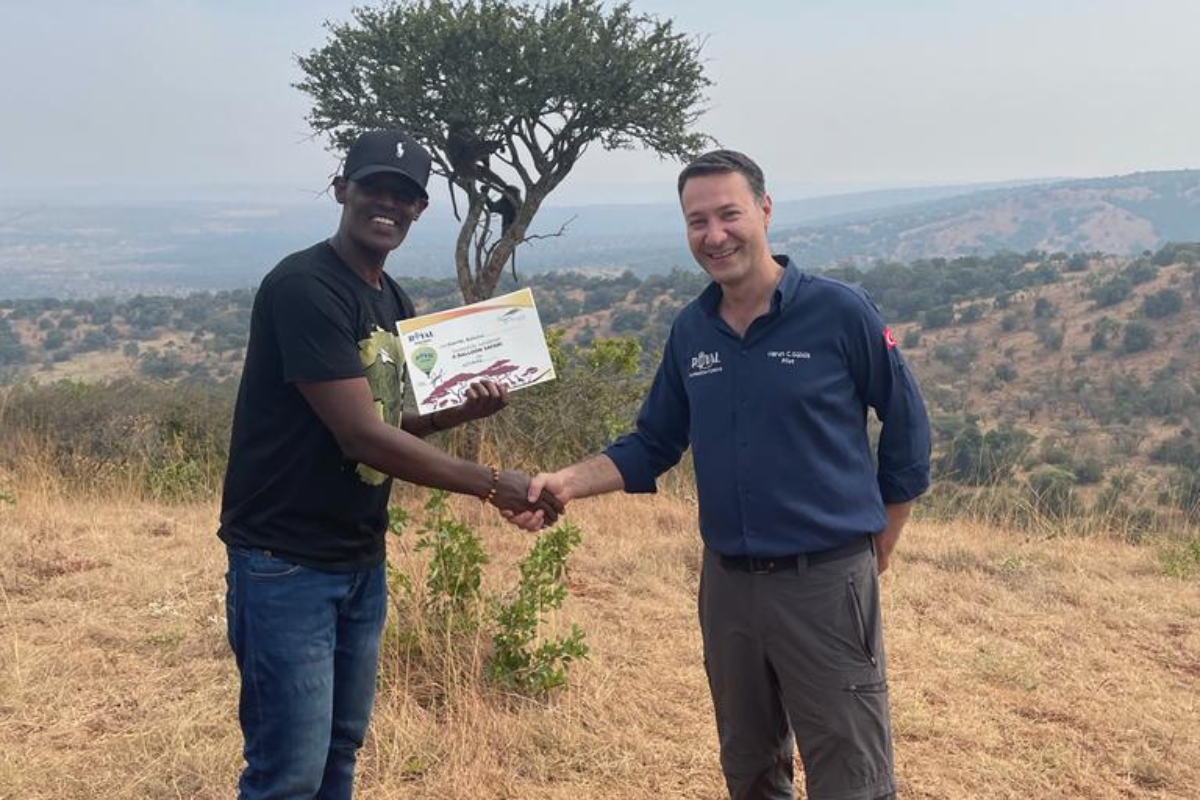
The author receiving his certificate of participation after landing