The Akagera Expedition
I traveled to the Eastern Province one day before visiting the national park. This itinerary enabled me to enter the protected area at six a.m. without having to drive all the way from Kigali in the wee hours of the morning. It is important to have a good night’s sleep before an adventure-filled day.
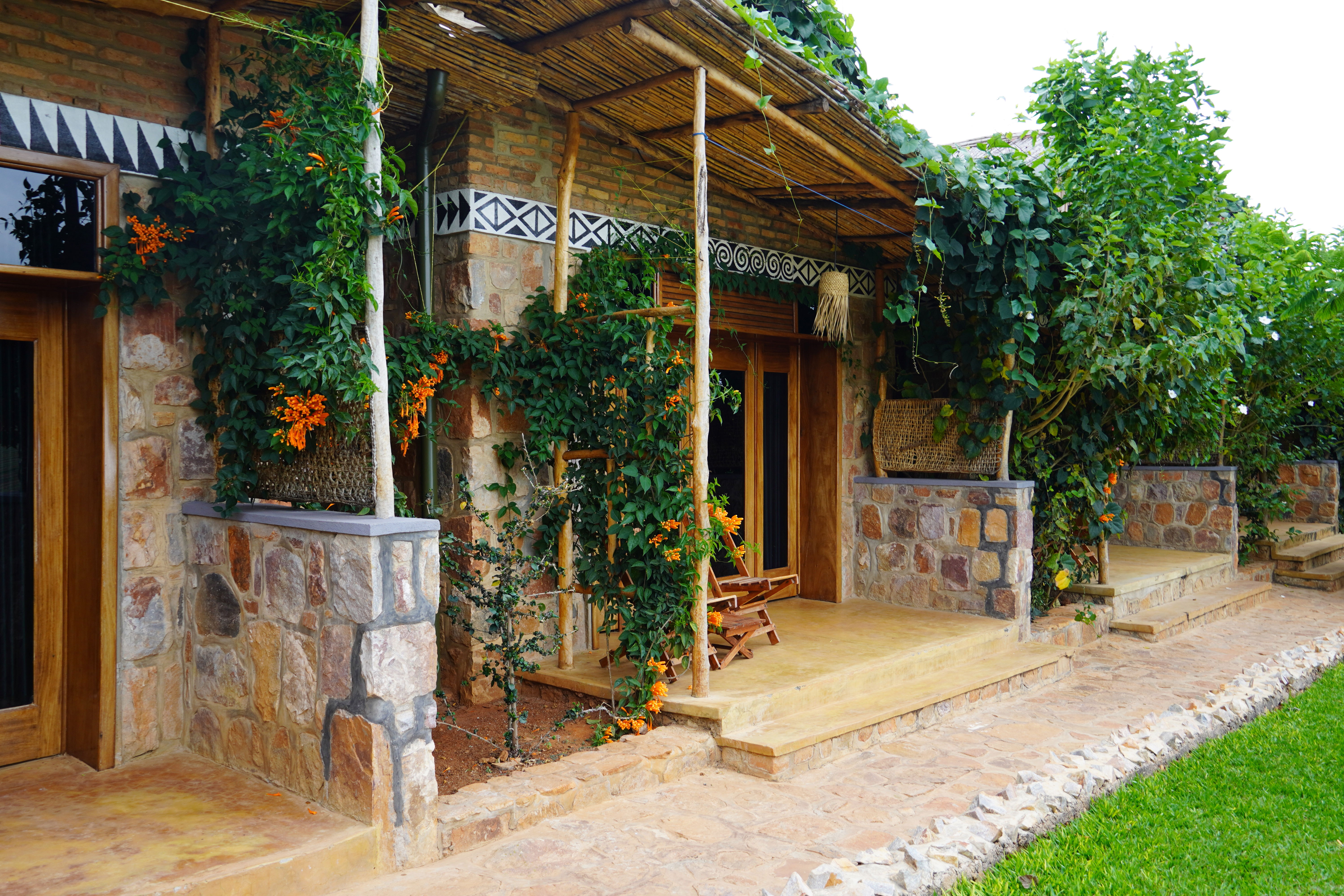
Speaking of a good night’s sleep, I spent a night at Akagera Transit Lodge. The state-of-the-art lodging facility is located a stone’s throw away from the park’s southern gate. The property encompasses a restaurant, coffee shop and gardens.
Other accommodation options in the area include Rutete Eco Lodge, Coco Park Hotel, Akagera Rhino Lodge, Akagera Safari Camp, Ihema Lodges, and Akagera Park Inn, with several additional lodging facilities located within the park itself.
Akagera Transit Lodge
Hot Air Balloon Experience
We entered the park through Kiyonza Gate. Then we branched off and spun along Kayitaba Road. Shortly thereafter, we took another turn and proceeded to our takeoff spot, off Gasumbashyamba Road. There is a network of roads in the park, bearing distinct names. In addition, deviations and milestones are clearly marked.
Upon arrival, we grabbed some coffee and watched the Royal Balloon Rwanda crew inflating the balloons. The inflating exercise is quite intriguing. This was an opportunity to learn something about the science behind the first manned flying mechanism in history.
Flying in a gondola is one of the most thrilling things I have ever done. Also known as a wicker basket, the weaved carrier is partitioned to create a tiny cockpit. As small as it is, the cockpit has enough space for the pilot and liquid propane cylinders.
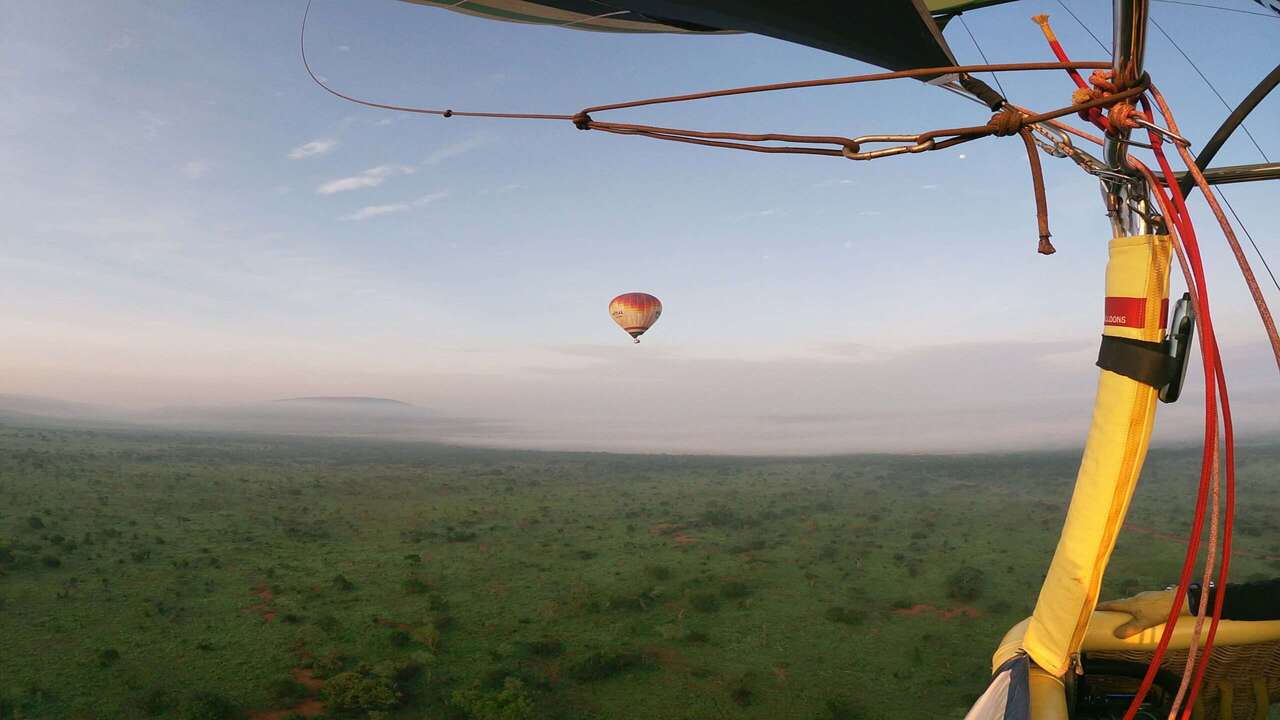
As we ascended higher and higher, we waved at the passengers of the second balloon. They waved back, beaming with excitement.
While airborne, I marveled at the sprawling Savannah and saw wild animals roaming around. The ground crew was driving towards the direction of the balloons. When this was happening, drivers of safari cars slowed down to allow their passengers to capture the aerial show we were staging.
Our flights were followed by a champagne-toasting landing ceremony, in accordance with a long-standing ballooning tradition. Finally, we had breakfast in the bush. This treat was an icing on the cake.
Hot air balloon safari
Game Drive
After my unforgettable hot air balloon experience, I went to the park's reception to gather all the information I needed. While at the reception, I studied the map and fine-tuned details of my game drive.
It is advisable to buy a map prior to embarking on an unguided tour. However, my stingy self took a photo of the map hanging on the wall instead of buying one. The photograph of the map gave me clear directions. Getting lost in the bush wasn't a concern whatsoever.
Despite the clarity of the said photograph, a guide would have been more useful. Hiring one is highly recommended. There are things an image of a piece of paper can't explain. Guides will be at your disposal, for a reasonable fee, whenever you show up.
As part of my final preparations, I located viewpoints, picnic sites and campsites. Although camping wasn't part of the itinerary, I relied on these facilities for bathroom breaks. I also had lunch at Mihindi Campsite & Café.
Furthermore, I skimmed through the park's etiquette and made sure I understood its code of conduct. Then I pinpointed the locations of different lakes, marshlands, peninsulas and plains. On top of that, I estimated distances between milestones and figured out how to pace myself along the way.
Apart from a variety of bird species, primates and antelopes, I didn't see much in the southern part. If you spin around the southern flank of the park and exit through Kiyonza Gate, you will probably be disappointed. I found a lot of animals on the northern side of the park. The second half of this memorable game drive was slower because I spent a lot of time gazing at animals of all shapes and sizes.
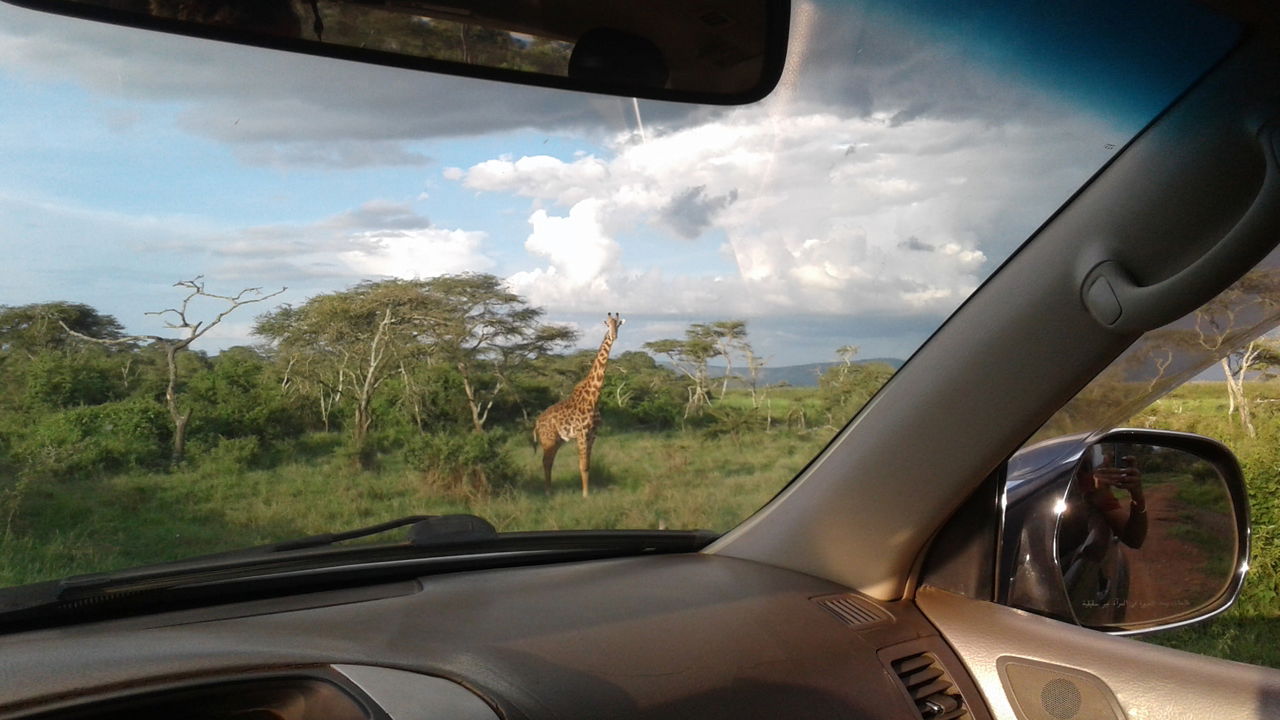
Herds of giraffes, zebras, elephants and buffaloes were all over the place. From time to time, I had to stop and wait for animals to cross the road. Watching a group of giraffes strolling elegantly, right in front of my bumper, was the highlight of the game drive.
Game Drive
Lake Ihema
Boat rides in a crocodile-infested Lake Ihema are both thrilling and nerve-racking. Before we get to the boating part, let's revisit the past and put history into perspective. While camping at Ihema View Campsite, I was informed by my host that Lake Ihema derived its name from a tent. This campsite is set up on Nyagakonji Hill, overlooking the lake.
In 1876, Henry Stanley reportedly pitched his tent on the shore of Lake Ihema. His tent became a monumental landmark along the shoreline. Eventually, the lake was named Ihema, a Kinyarwanda word that means tent. This was Stanley’s second expedition in Africa. He was on a mission to map out major East and Central African water bodies in a bid to trace the source of the Nile.
Boating around Lake Ihema enables tourists to see both aquatic and land animals while enjoying the thrill of sailing. In addition, this activity offers an opportunity to take a closer look at Nyirabiyoro Island, named after an 18th Century fortune-teller.
Legend has it that Nyirabiyoro ended up on the island, in the 1740s, after being banished by King Kigeli III Ndabarasa. His dismissal was a result of an unpleasant prophecy.
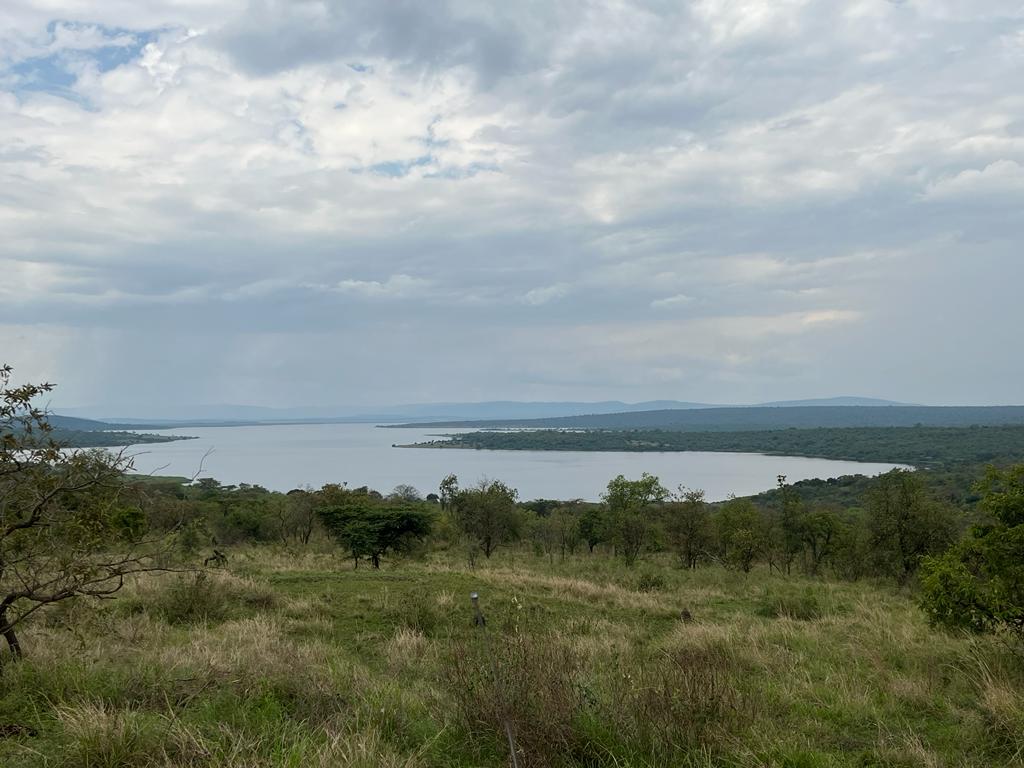
Lake Ihema
Lake Shakani
This deviation wasn't part of the script. I ended up at Shakani Campsite because I needed to use the bathroom. Emptying my bladder in the bush would be risking being eaten by a lion. After the bathroom break, I spent some time gazing at a score of hippopotamuses.
Hippopotamus (singular) is a Latin word derived from two Greek nouns -- hippo and potamos -- which can be translated as horse and river respectively. Combined, the two words mean river horse.
Hippos are native to sub-Saharan Africa. They have barrel-shaped torsos, wide mo-uths and large canine tusks. Despite their stocky shapes and short legs, they are capable of running at a speed of up to 30 km/h. The semiaquatic mammals are vegetarians. However, they can attack human beings when felt threatened.
Through the powerful lenses of my binoculars, I observed a group of grunting hippos keenly. Watching them lifting their 1500-kg bodies before falling back onto the surface of the lake, and disappearing underneath it, was captivating.
As this was going on, one of them emerged with its mouth wide open. Next to the mouth-opening monster, another hippo see-med to be asleep. It's unbelievable how these creatures take naps while floating.
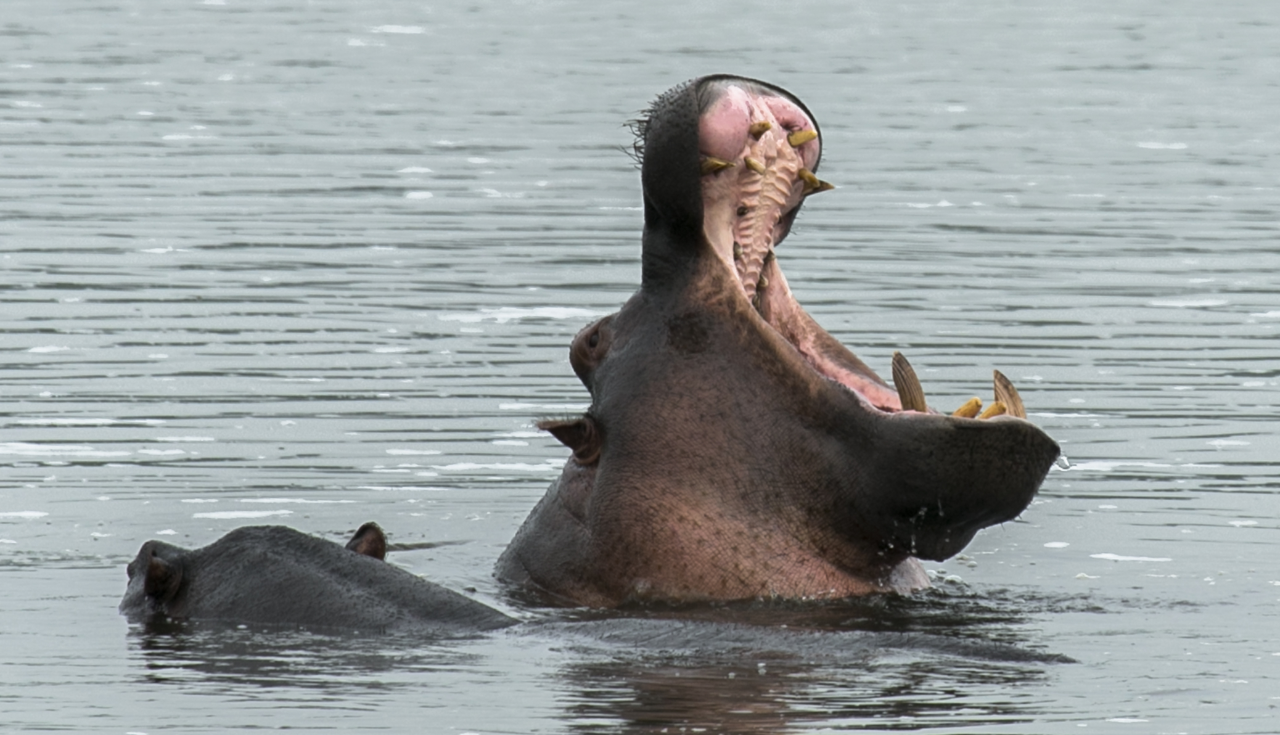
Lake Shakani
Lake Mihindi
Apart from Mihindi, there are three other campsites namely Muyumbu, Shakani and Mutumba. High-end accommodation services are offered by Ruzizi Tented Lodge, Magashi Camp, Karenge Bush Camp and Mantis Akagera Game Lodge.
Mihindi Campsite & Café is set up on the shore of Lake Mihindi. For the record, there are ten lakes within the boundaries of the protected area.
Before I entered the park, I packed sandwiches and refreshments from Akagera Transit Lodge. There is another coffee shop at the park's headquarters, about three kilometers from the entrance. For lunch, I would recommend Mihindi Campsite & Café. However, it is advisable to have snacks and refreshments in your vehicle throughout the ride.
While munching my sandwiches, I marveled at the lake and listened to my favorite songs. I am talking about the soothing melodies produced by those birds I always write about. It is at this point when I added camping at Mihindi to my bucket list.
Before I resumed the game drive, I took a walk around the campsite and saw a low-lying electric fence installed along the shoreline. The tent protects campers from dangerous aquatic animals.
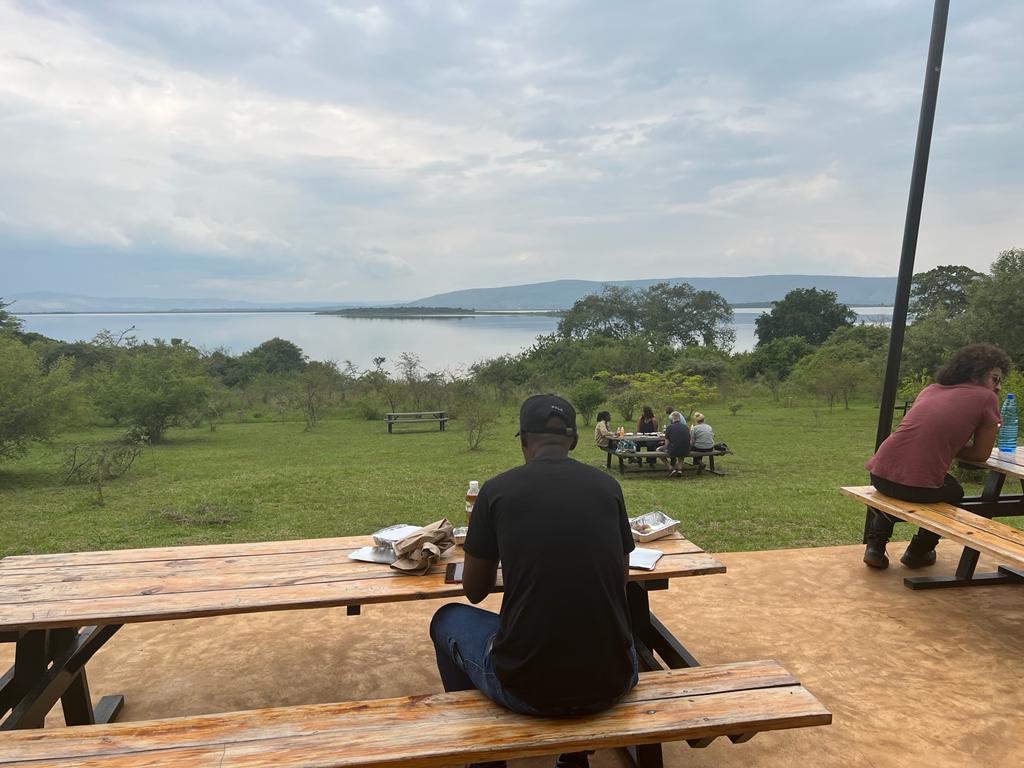
Mihindi Campsite & Café
Birding Paradise
Before I visited this national park, I envisioned a dry Savannah, devoid of water bodies. When I showed up for the first time, I was surprised to learn that the protected area encompasses ten lakes surrounded by extensive marshlands. Kagera River flows on the eastern edge of the park, forming the boundary line between Rwanda and Tanzania.
Akagera's wetland area is home to more than 400 species of birds. I could have done a whole booklet about birds without even scratching the surface.
Nature-based tourism enables me to understand wildlife better. Every nature getaway is a study tour. While visiting Akagera, I spent some time studying birds and trying to identify them through colors and sound.
Nature-based tourism enables me to understand wildlife better. Every nature getaway is a study tour. While visiting Akagera, I spent some time studying birds and trying to identify them through colors and sound.
As the name suggests, the red-winged francolin has red wings. The chest of a brown-chested lapwing is brown. The face of a red-faced barbet is ..... I am sure you can easily complete that sentence. Yes, there are more distinctive features than the color alone. However, the pigmentation of body parts provides leads.
Furthermore, I try to put names to birds whenever I listen to the sounds they produce. The longer I listen to them, the more I notice differences in tones, patterns and pitches.
I mentioned earlier how the birds inhabiting the shore of Lake Mihindi entertained me during my memorable lunch break at Mihindi Campsite & Café. The soothing melodies of the yellow-fronted canary had a calming effect. Known for its silvery twitter, this talented singer is a true definition of a songbird.
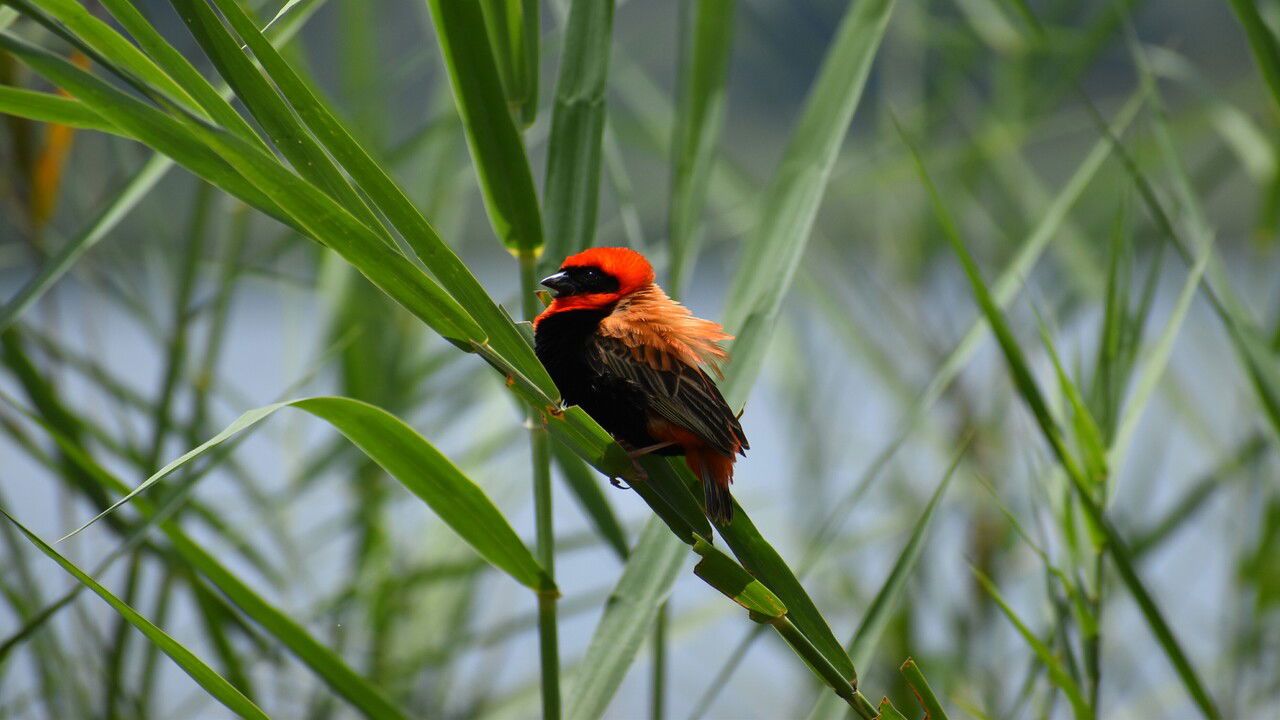
Akagera marshland area is home to more than 400 species of birds
Tracking the King of the Jungle
Lions were reintroduced to the Akagera National Park in 2015, about fifteen years after being wiped out of the Land of 1,000 Hills. Today, more than thirty lions call Akagera home. What are the odds of seeing one during a random game drive?
I was lucky to see other species of the big cats, barely a kilometer after entering the park. Then I covered a long distance before spotting anything else apart from primates, birds, antelopes, hippos and crocodiles.
The farther I drove, the more animals I encountered. Zebras, flaunting their beautiful black and white stripes, were all over the place. At some point, I had to stop because some baboons were conducting a meeting in the middle of the road. A couple of kilometers ahead, I stepped on the brake pedal again. This time, a handful of giraffes were crossing the road in a single file.
As I approached the exit, my hope of seeing the king of the jungle faded gradually. When I saw an experienced tour operator driving towards the opposite direction, I flagged him down and asked for tips. He advised me to try my luck at the relatively flatter Kilala Plains. After spinning around a herd of buffaloes at Kilala, I gave up.
Karenge Bush Camp
Before heading to the exit, I took a detour to Karenge Bush Camp. Although non-residents do not have access to the camp, I was cleared.
I grabbed a drink and sat down at the fire place. From the hill, I used a pair of binoculars to look at the buffaloes I had seen earlier. After quenching my thirst, I strolled around and admired the deluxe campsite.
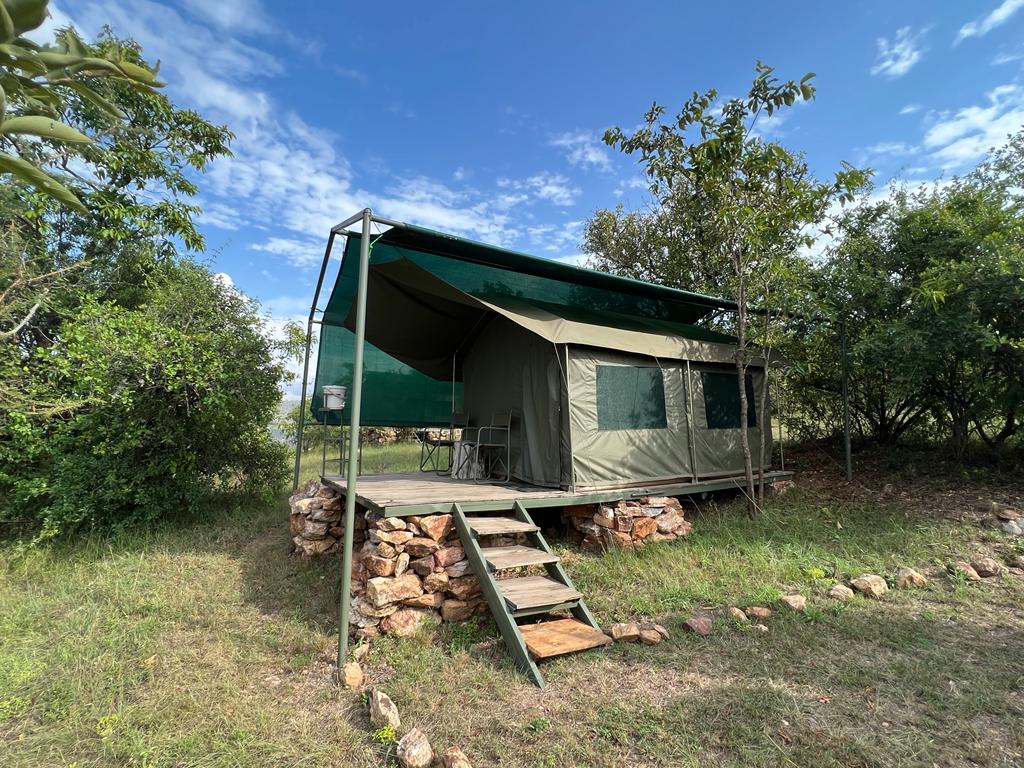
Pieces of stones are used to build pillars supporting wooden floors. This combination of stones and wood form the bases on which tents are erected. The said construction materials blend perfectly to reflect the environment nature enthusiasts yearn for.
Karenge Bush Camp can accommodate up to twelve people at a time. Each tent has an open toilet and an equally unenclosed solar-heated shower.