Tanga: Embracing the Rhythm of the East African Coast
After exploring Mombasa by night, the next mission was clear: get to Tanga. But there was a hitch. Every bus to Tanzania was fully booked. An inconvenience, yes, but hardly a deal-breaker. If the direct route was closed, I would simply create my own, stitching together a cross-border odyssey one mode of transport at a time.
From downtown Mombasa, I flagged down a three-wheeler, locally known as a tuktuk, and plunged into the city’s knotted arteries en route to the Likoni Ferry. The morning air carried a sharp blend of salt and heat, while traffic churned in restless layers: matatus lunging forward, handcarts inching along, motorcycles weaving through impossible gaps. My driver, however, remained unbothered, threading the little machine through the chaos with the calm precision of someone who had done this a thousand times before.
After crossing to the southern mainland aboard the ferry, shoulder to shoulder with commuters and hawkers, I wedged myself into a fourteen-seater van rumbling toward Lunga Lunga, tracing the coastline through Diani. The road unfurled in shifting scenes: coral-stone mosques glowing in the sun, mango vendors stationed beneath roadside trees, and flashes of the ocean glinting like a silver ribbon beyond the palms.
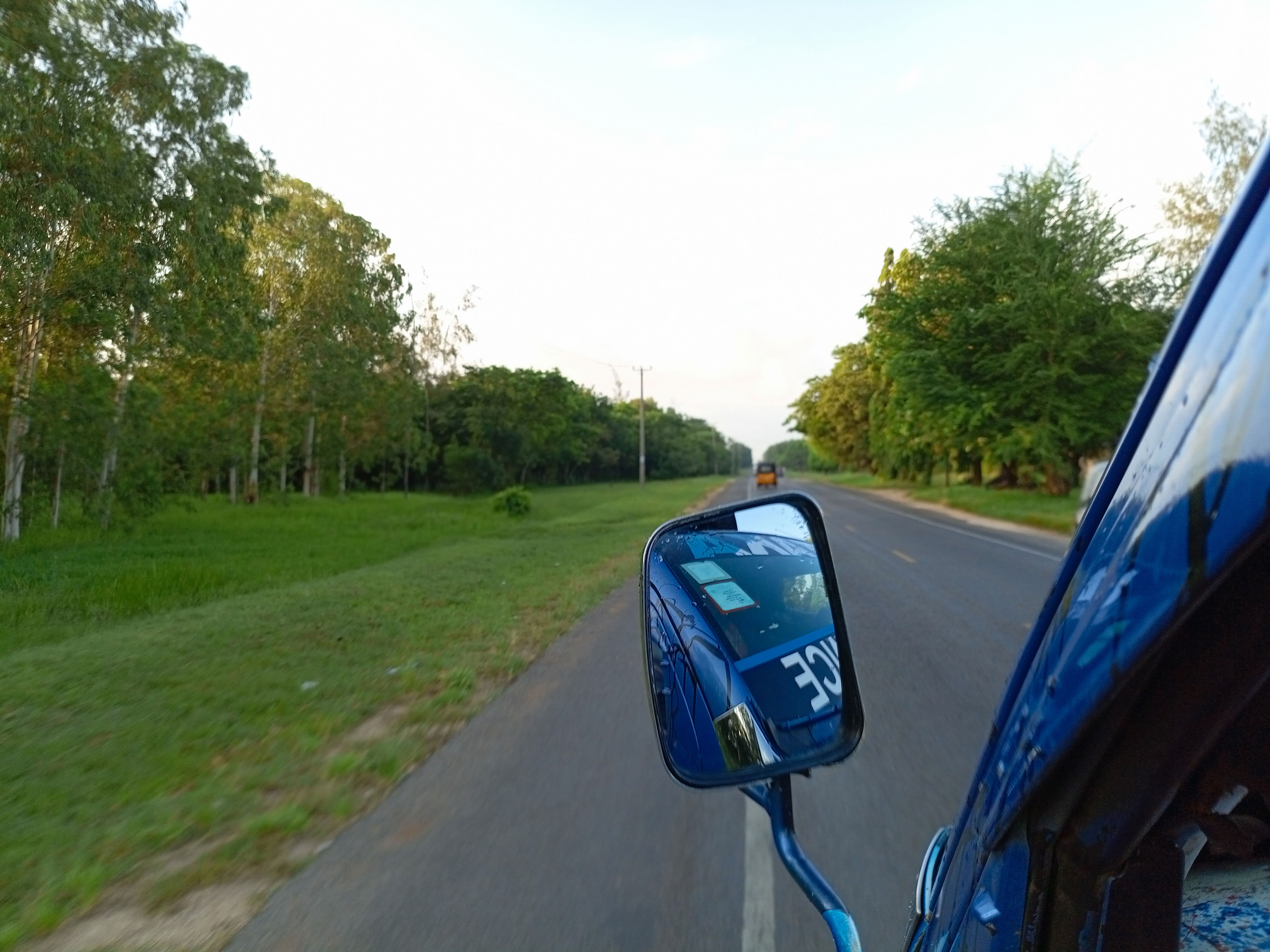
After crossing to the southern mainland aboard the ferry, shoulder to shoulder with commuters and hawkers, I wedged myself into a fourteen-seater van rumbling toward Lunga Lunga, tracing the coastline through Diani.
With no buses running between Lunga Lunga and the Horohoro One-Stop Border Post, the road demanded something lighter and faster: a bodaboda. I swung a leg over the motorcycle taxi, and we shot forward, the wind snapping me fully awake as it tore through the tropical heat. We skimmed past drowsy settlements where shopfronts yawned open and life moved at its own unhurried rhythm, untouched by the urgency of the highway.
The crossing into Tanzania was efficient, though the immigration hall pulsed with long, slow-moving lines. On the other side, I slipped into a van bound for Tanga, where the journey quickly transformed into something resembling a rolling reunion. The driver greeted passengers like old friends, and we paused in nearly every village, trading pleasantries, collecting parcels, even veering off toward a fishing camp to deliver a carefully wrapped bundle. No one appeared hurried, not the driver, not the passengers, and, before long, not even me. I loosened my grip on the clock and surrendered to the easy rhythm of coastal Swahili life.
By the time we rolled into Tanga, the light had softened and the journey had settled into memory. I hailed a bajaji, what Tanzanians call a tuktuk, and told the rider I was hunting for a decent room within a modest USD 15–20 budget. He didn’t pause. “Golden Memory Lodge, Fourteenth Street,” he replied with quiet certainty. The name sounded almost prophetic, and, as it turned out, it lived up to it. Only later did I learn that among budget travelers, Golden Memory carries a quiet reputation for being clean, central, and reliably affordable.
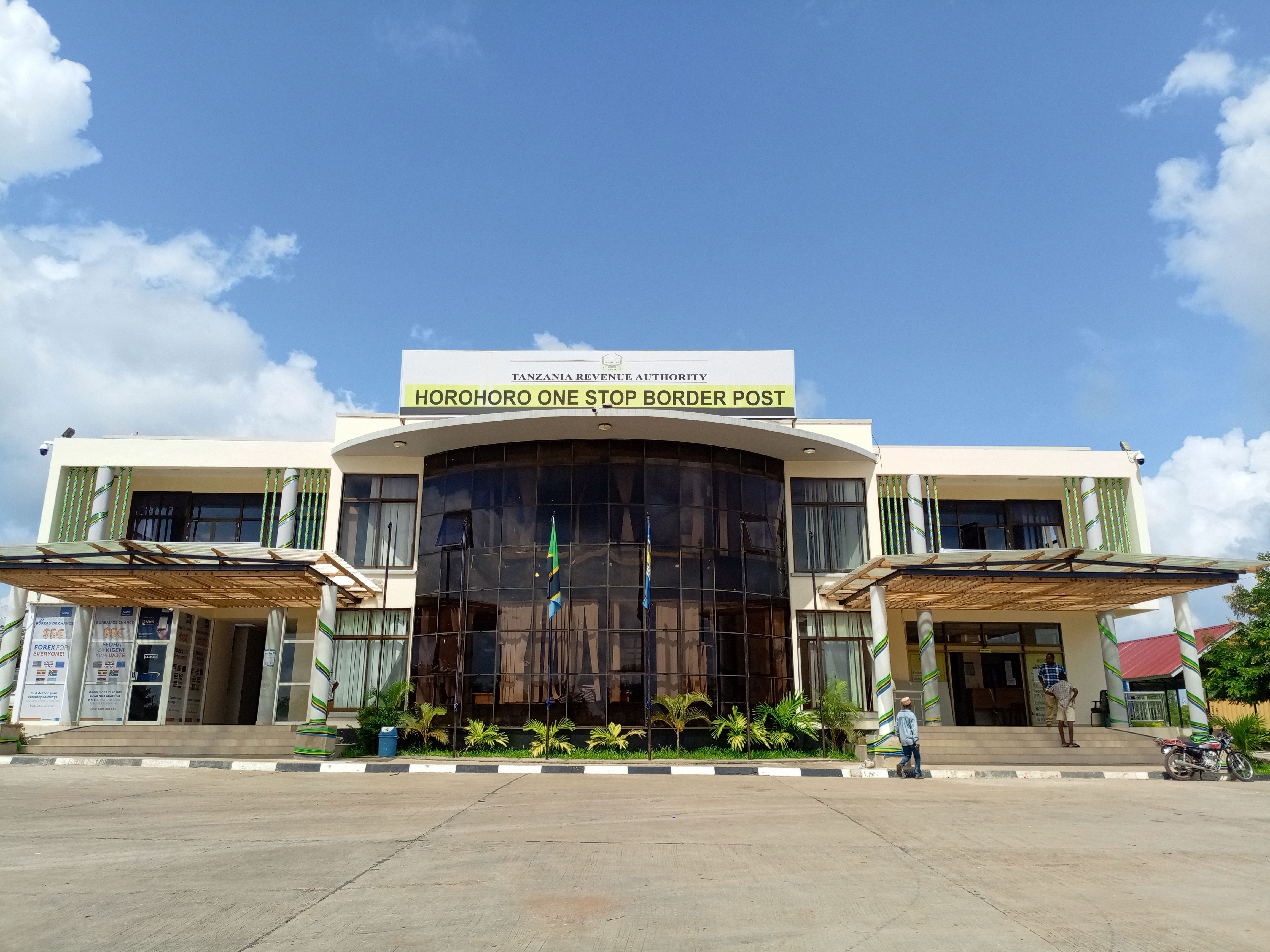
The crossing into Tanzania was efficient, though the immigration hall pulsed with long, slow-moving lines.
I hadn’t slept the night before, Mombasa’s nocturnal charm had seen to that. By the time I reached Tanga, ambition had given way to practicality: a light wander, an early dinner, and immediate surrender to a bed. I briefly toyed with the idea of visiting the Amboni Caves, but the distance and the steady drain of fatigue quickly made the decision for me.
Instead, I settled in for lunch at Forodhani Gardens, where the ocean plays hide-and-seek behind a fringe of trees and grilled fish arrives sizzling, laced with a confident kick of spice. The air carried the mingled scent of charcoal and salt, tempered by a steady coastal breeze, the kind that turns a simple meal into a lingering midday pause. Afterward, I drifted toward Raskazone Beach, unhurried and content.
There, I kicked back and let the world slow to a gentle sway, sipping fresh coconut juice straight from the shell. Sunlight danced on the water, and the steady crash of waves worked its calming magic until calm gave way to adrenaline. Moments later, I was skimming across the Indian Ocean on a jet ski, salty spray lashing my face as I bounced over each wave. It was the perfect way to reconnect with the Indian Ocean, a body of water I had sorely missed.
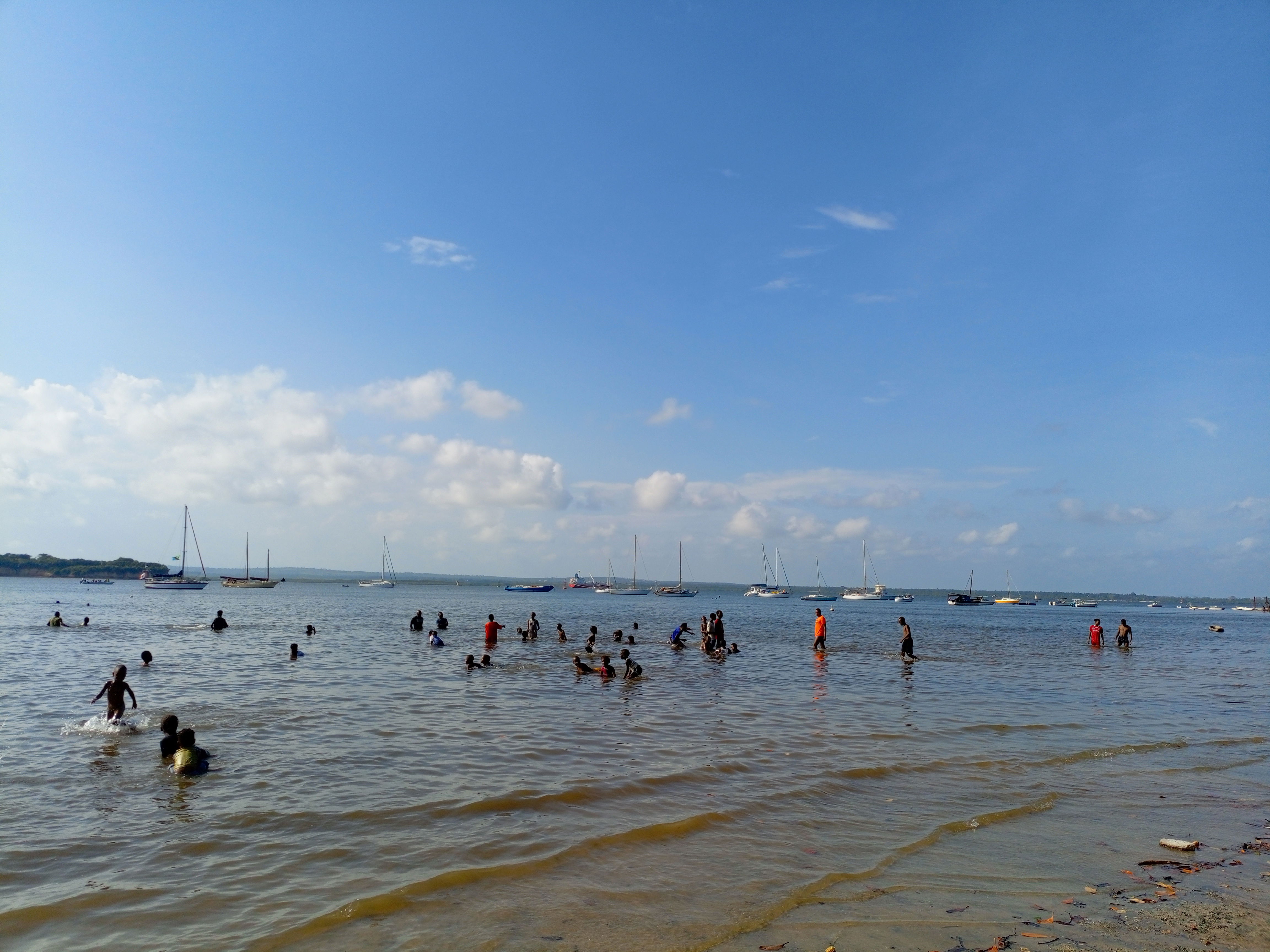
After lunch, I made my way to Raskazone Beach to reconnect with the Indian Ocean, a body of water I had deeply missed.
As dusk settled, I let my feet lead me through the heart of the municipality. Walking slows time and sharpens observation. Step by step, I passed weathered colonial buildings, children chasing a football across sandy alleys, and women draped in vibrant khanga fabric, laughing and chatting outside tiny neighborhood shops.
Before heading back to Golden Memory for the night, I paused at a street corner where a group of elderly men, wazee wa Tanga, were absorbed in a game of bao, the classic board game of the East African coast. They welcomed me with quiet nods and smiles. I sank onto a bench, sipping strong black coffee from one of those tiny enamel cups, and joined a few soft rounds beneath the warm orange glow of a streetlamp. It was a perfect close to a long, winding day.