Six Hours in Accra
I had breakfast at RockWoods African Restaurant, on Ring Road Central. Then I spent a few minutes studying the map of Accra and fine-tuning my itinerary. When I stepped out of the restaurant, I disappeared into the streets of a city I wasn’t familiar with. As I often say, walking allows me to observe and absorb more. In addition, the oldest form of exercise offers priceless health benefits. So, naturally, walking became the very first thing I did in Ghana’s capital.
The streets of Accra, however, are not as pedestrian-friendly as those I traverse back home. The lack of paved sidewalks, the suffocating congestion, and West Africa’s unrelenting heat all combine to sap the joy from walking here. Even so, I pressed on, covering nearly four kilometers on foot.
I made my way to the Kwame Nkrumah Interchange. Formerly known as the Kwame Nkrumah Circle, the interchange is a vital hub that connects all four corners of the city—and beyond. Completed in 2016, the project reshaped the old roundabout, easing traffic flow and unclogging arteries that once brought the city to a standstill.
I exited the Kwame Nkrumah Interchange via the avenue named after the same towering figure in Ghana’s history. My initial plan was to pause briefly at the Kwame Nkrumah Water Park before heading to the Kwame Nkrumah Memorial Park. As I noted earlier, you’ll need to get used to this name—it appears often throughout my Accra chronicles.
Unfortunately, the memorial park was temporarily closed. My next stop was supposed to be the Black Star Gate. However, I squeezed in a stopover at Makola Market. Visiting the market was more than a shopping errand—it was a chance to mingle with locals and experience the pulse of daily life in the city. Makola was buzzing with activity: vendors shouting their offers and customers weaving through the narrow aisles.
I passed clusters of stalls, politely brushing off the most insistent calls until one item stopped me in my tracks—a jersey of Ghana’s national soccer team. I walked over and offered half the asking price. After a spirited round of bargaining, we struck a deal, and I walked away with a Black Stars shirt. Today, that jersey hangs framed on the wall of my favorite sports bar back home in Kigali, Rwanda. I donated it to the pub, which has a tradition of displaying jerseys on its walls.

Kwame Nkrumah Interchange
When I left the bustling Makola Market, I made my way to the Independence Monument on 28th February Road. The street derived its name from the date of a tragic event in Ghana’s history—the Christiansborg Castle crossroads shooting. On February 28, 1948, three Ghanaian WWII ex-servicemen were shot dead by British police superintendent Colin Imray as they peacefully marched toward Christiansborg Castle.
Their mission was simple: to present a petition to the colonial administrator, Sir Gerald Hallen Creasy. Instead, the deaths of Sergeant Adjetey, Corporal Attipoe, and Private Odartey Lamptey ignited widespread riots and intensified the nation’s struggle for independence.
Less than a decade later, in 1957, Ghana became the first country in sub-Saharan Africa to gain independence. Under the leadership of Kwame Nkrumah, the new nation not only inspired freedom fighters across the continent but also actively supported their struggles. A staunch Pan-Africanist, Nkrumah extended solidarity and practical aid to comrades beyond Ghana’s borders, leaving an indelible mark on Africa’s decolonization journey.
Having taken an interest in Ghana’s history, walking through the Black Star Gate was especially captivating. The structure stands at the center of a roundabout on 28th February Road. As mentioned earlier, this road was named after the Christiansborg Castle crossroads shooting on February 28, 1948. The incident sparked nationwide protests and intensified the push for independence.
From the roundabout, I strolled into Black Star Square, the site of Ghana’s annual Independence Day celebrations. Every March 6, a grand parade commemorates the nation’s historic achievement, marked with pomp and splendor.
The symbolic Black Star represents freedom all over Africa. As the first sub-Saharan African country to gain independence, Ghana paved the way for the continent’s decolonization. Within the square, the Independence Arch and the monument honoring those who gave their lives stand as powerful reminders of this legacy. With this landmark checked off my bucket list, I continued my journey to Independence Beach.
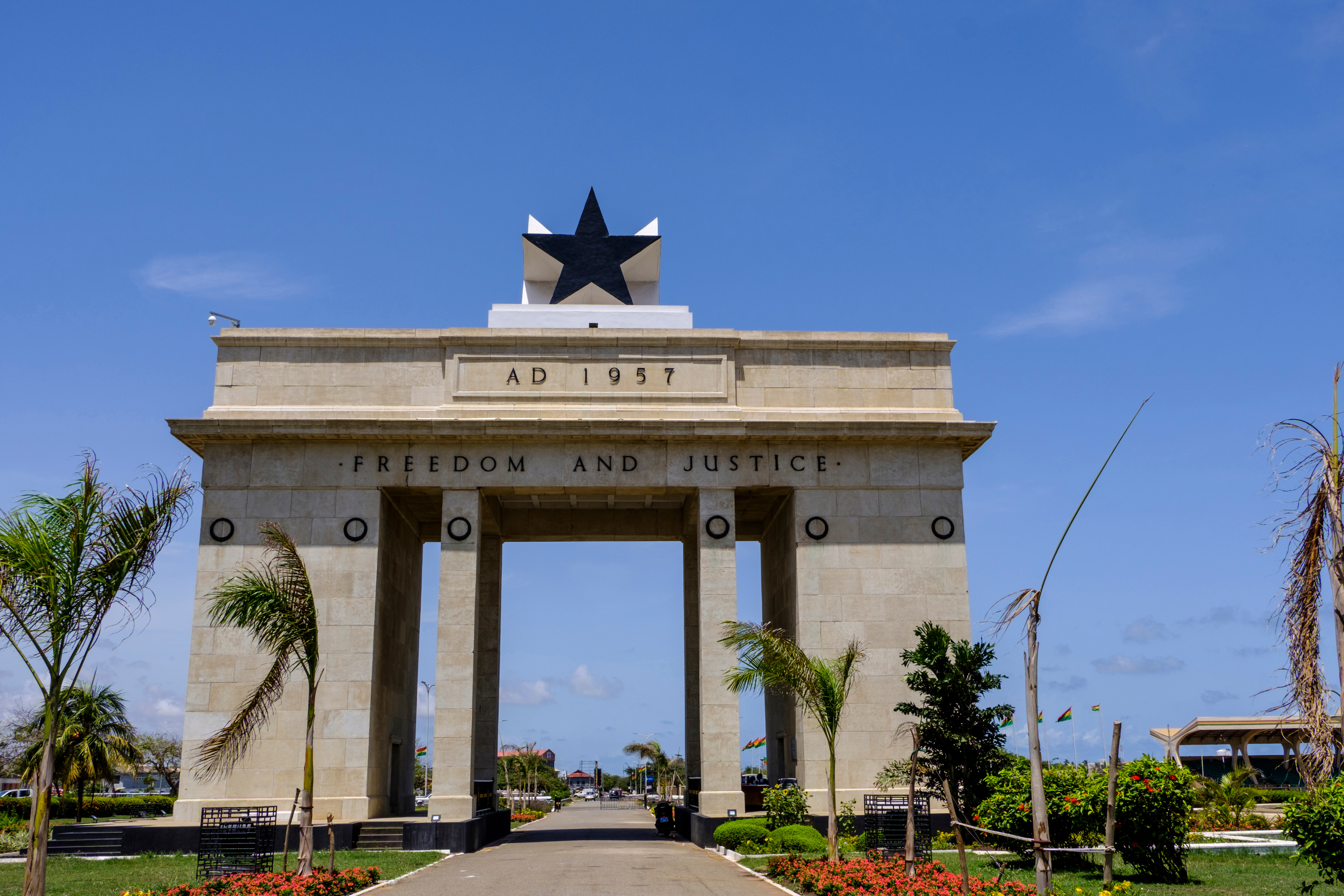
Black Star Gate
Every beach in Accra tends to be crowded on Sundays. Fortunately, I arrived at Independence Beach before most beachgoers. As I strolled along the sand, hawkers did their best to tempt me with items I didn’t need. The more I ignored them, the more persistent they became. One seller, in particular, caught my attention with Africa-themed necklaces. I don’t wear necklaces myself, but I have friends and family members who love anything that celebrates their African identity. I snapped a photo of the pieces and shared it with them, and orders started coming in immediately.
Just like at Makola Market earlier, I offered half the seller’s asking price. When he refused, I turned to leave—but he followed me, refusing to let go. After another round of bargaining, we finally reached an agreement, and money changed hands.
“Where’s my receipt?” I asked. “Where are you from?” he countered, sidestepping my request. Before I could reply, he slipped the cash into the pockets of his black leather jacket and vanished. I couldn’t help but wonder, who wears a heavy jacket on such a hot day?
After my encounter with a hawker at Independence Beach, I booked another ride and headed to the popular Labadi Beach. Along the way, my 24-year-old driver spun a playlist of hit songs from African artists like Sarkodie, Burna Boy, and Tiwa Savage.
At one point, I stretched my arm to lower the volume. When Unachezaje by Diamond Platinumz came on, I asked my driver-DJ if he understood the lyrics. “I don’t speak Tanzanian,” he replied. “It’s not Tanzanian—it’s Swahili,” I corrected him. From there, our conversation flowed into contemporary Afro beats, which seemed to be his favorite topic.
Once we arrived, I paid an entrance fee of 20 Ghanaian Cedis (about USD 2) and made my way to the rooftop area of Mac Bay restaurant. Below, the sandy beach was dotted with tables, each packed with revelers under a cluster of colorful umbrellas.
While waiting for my lunch and sipping a cold drink, a couple of singers approached, offering to entertain me for a modest fee. I politely declined. Minutes later, some patrons from a nearby table hired them, and after their electrifying performance, I felt compelled to contribute a little myself—after all, I had been part of the thrilled audience too.
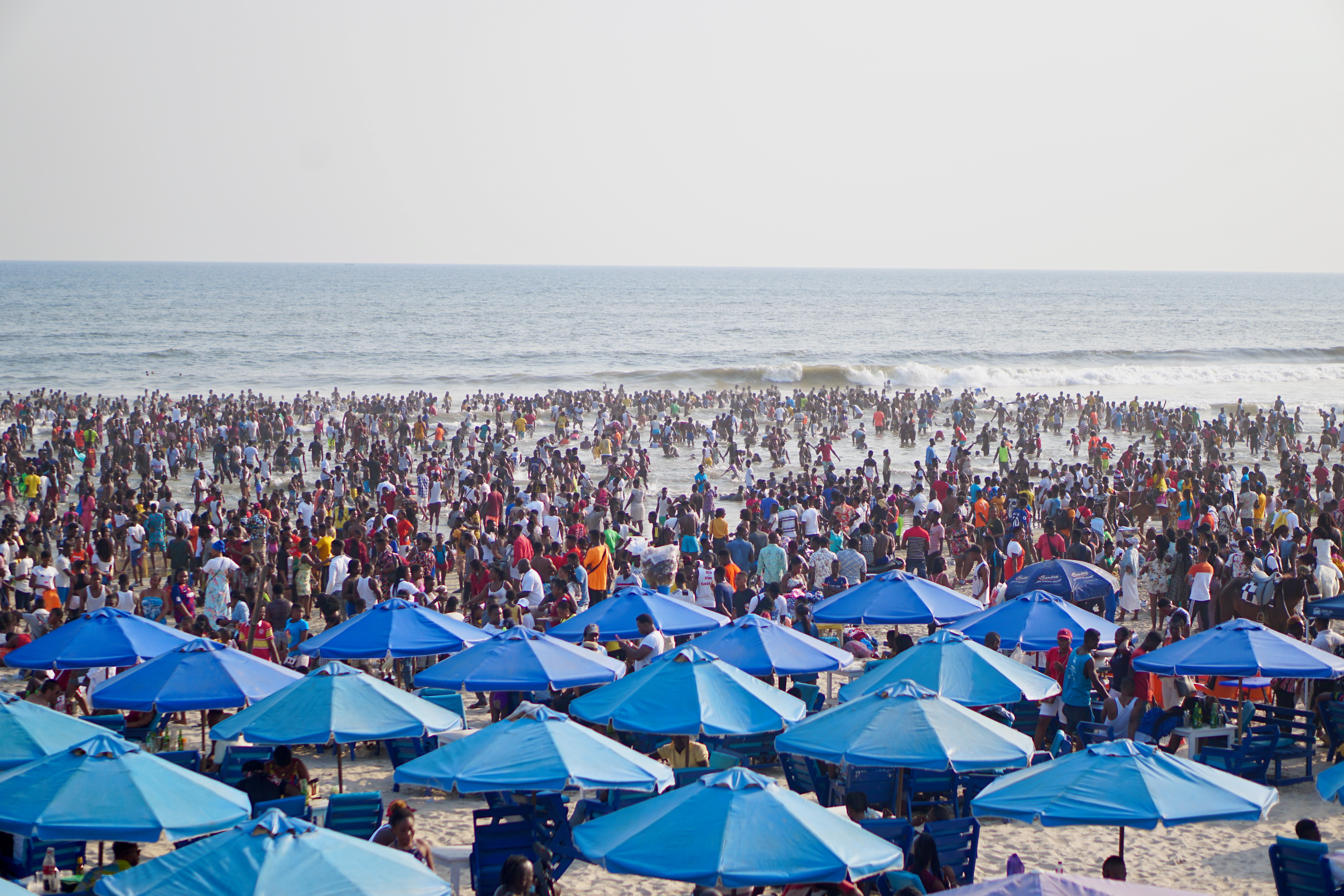
Labadi Beach
In the beginning of this memorable tour, I had breakfast at RockWoods African Restaurant, on Ring Road Central. My breakfast was served in a traditional bowl whose designer drew inspiration from Hausa art. Coincidentally, the content of the bowl in question was millet oatmeal known as Hausa koko.
Although culturally homogeneous, the Hausa people are scattered around West and Central Africa. More Hausa communities can be traced along the ancient Hajj and trade routes in the Horn of Africa and North Africa.
Energized by Hausa koko, I walked from the aforementioned restaurant to the Kwame Nkrumah Interchange. From there, I headed to the Black Star Square via Makola Market. Later on, I had lunch on the deck of Mac Bay Restaurant, within the premises of Labadi Beach.
My lunch, composed of fried plantain and a mixture of beans and black-eyed peas, was served on banana leaves. After the meal, I nursed some coconut juice while gazing at the splashing Atlantic waves.
Trying local delicacies enhances travel experiences. In addition, by consuming locally grown food, tourists support farmers in their destinations. Learning to prepare meals the traditional way while visiting another country is also highly recommended.
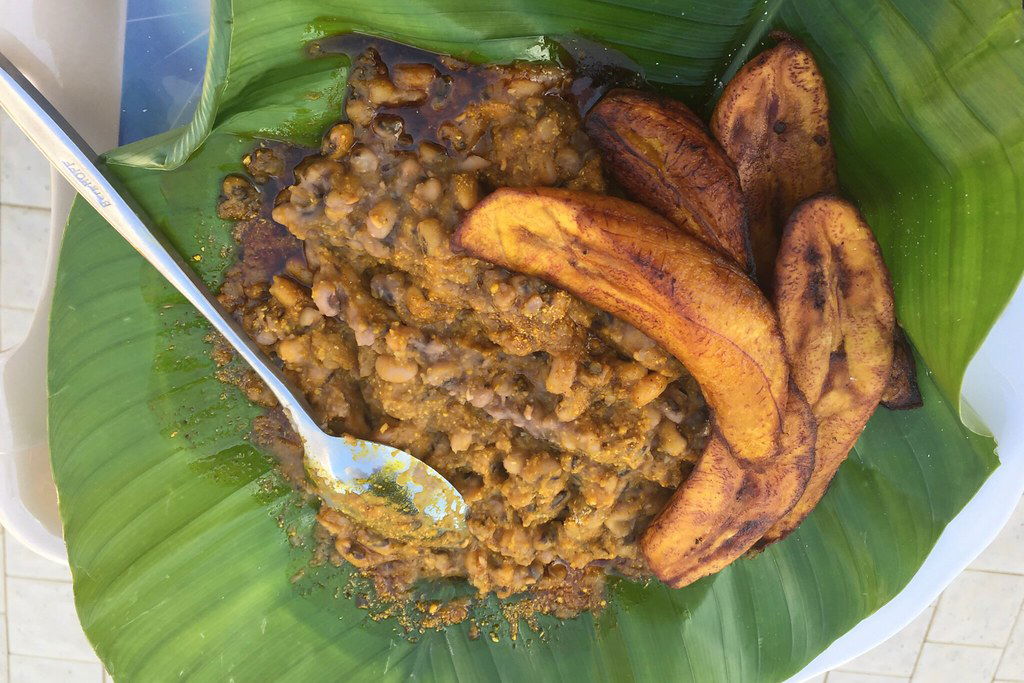
Ghanaian culinary delights
When I was a child, my friends and I played a game that challenged us to identify the flags of different African countries. Later, I learned that the colors on each flag carry symbolic meanings. Decades later, I find myself paying attention to the flags of the countries I visit, trying to remember what their color schemes communicate.
Recently, I discovered that the vibrant colors of African fabrics have meaning too. Traditional prints, often called Ankara, are more than mere decoration—their patterns symbolize peace, love, freedom, unity, and much more.
The iconic Afrocentric fabric, called Kitenge in East Africa, is earning recognition worldwide. It is used to craft shirts, hats, backpacks, laptop bags, wallets, and a wide array of accessories across the region and beyond.
One of my favorite pastimes in African markets is buying a piece of Kitenge and watching a tailor transform it into a custom-made creation. From clothing to accessories, Kitenge sparks creativity and caters to the ever-evolving tastes of fashion enthusiasts.
In West Africa, Ghanaian Kente stands out as one of the most celebrated fabrics, embraced by people of African descent worldwide. While in Ghana, I observed designers adding modern twists to traditional Kente, blending heritage with contemporary style in ways that feel truly magical.
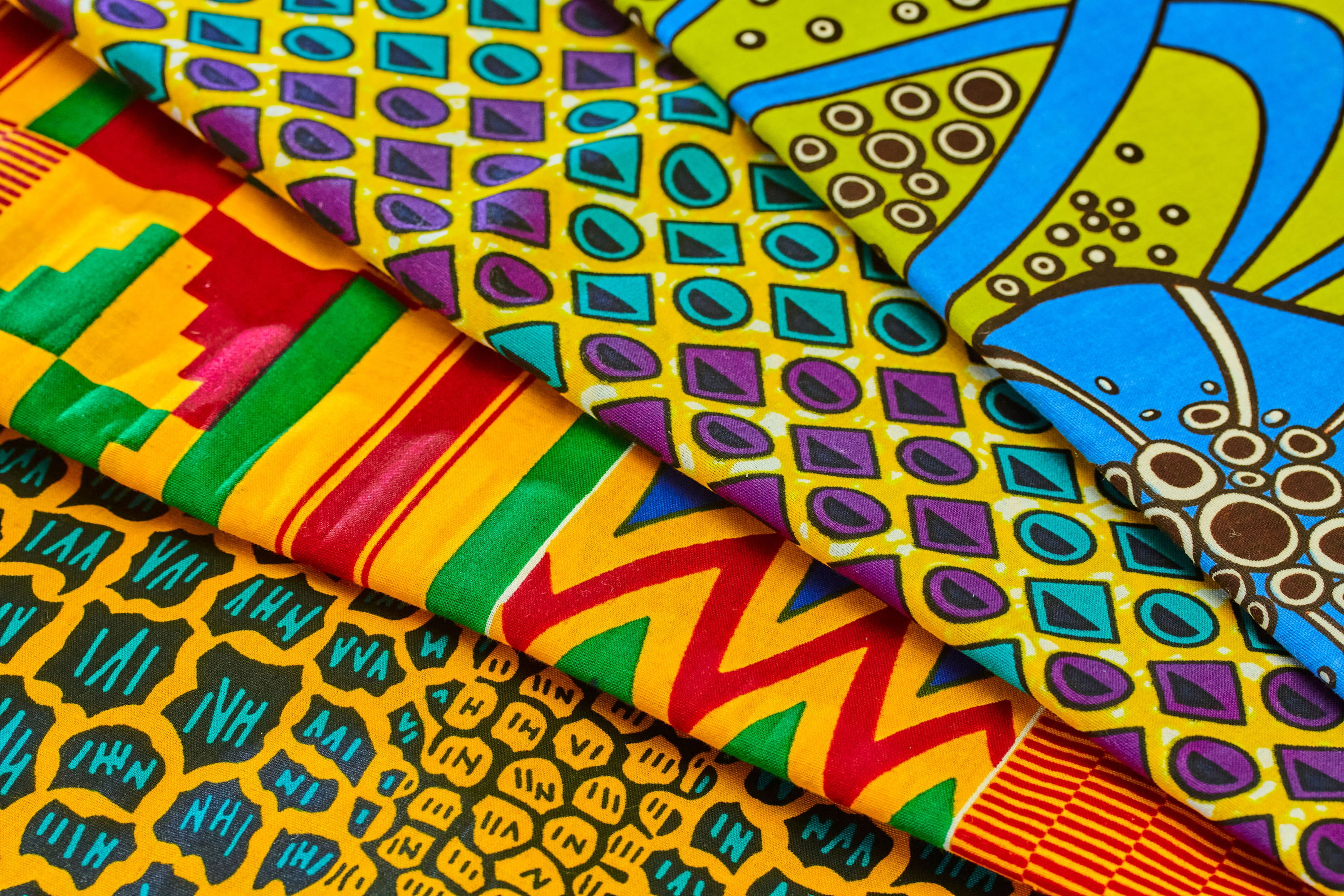
African fabric and symbolic colors.
While in Ghana, I paid for products and services in cash. Although Mobile Money transactions are widely used across the country, my MTN Ghana line wasn’t linked to a MoMo account. Hotels, restaurants, supermarkets, and other formal businesses accept debit and credit cards, but it’s wise to carry some cash, especially if you’re not a registered Mobile Money user.
My VISA card proved useless when buying a jersey from a vendor at Makola Market, and again when purchasing a handful of necklaces from a beach hawker.
The Ghanaian Cedi was introduced in 1965, replacing the Ghanaian Pound, which had been part of the British colonial monetary system. In 1967, following Kwame Nkrumah’s ousting in a coup d’état, the cedi was redesigned without his image.
The term ‘cedi’ originates from Akan, a language spoken in parts of Ghana and Ivory Coast, and translates to ‘cowry shell.’ Before colonial rule, cowries were used as currency in parts of Africa and the Indo-Pacific.
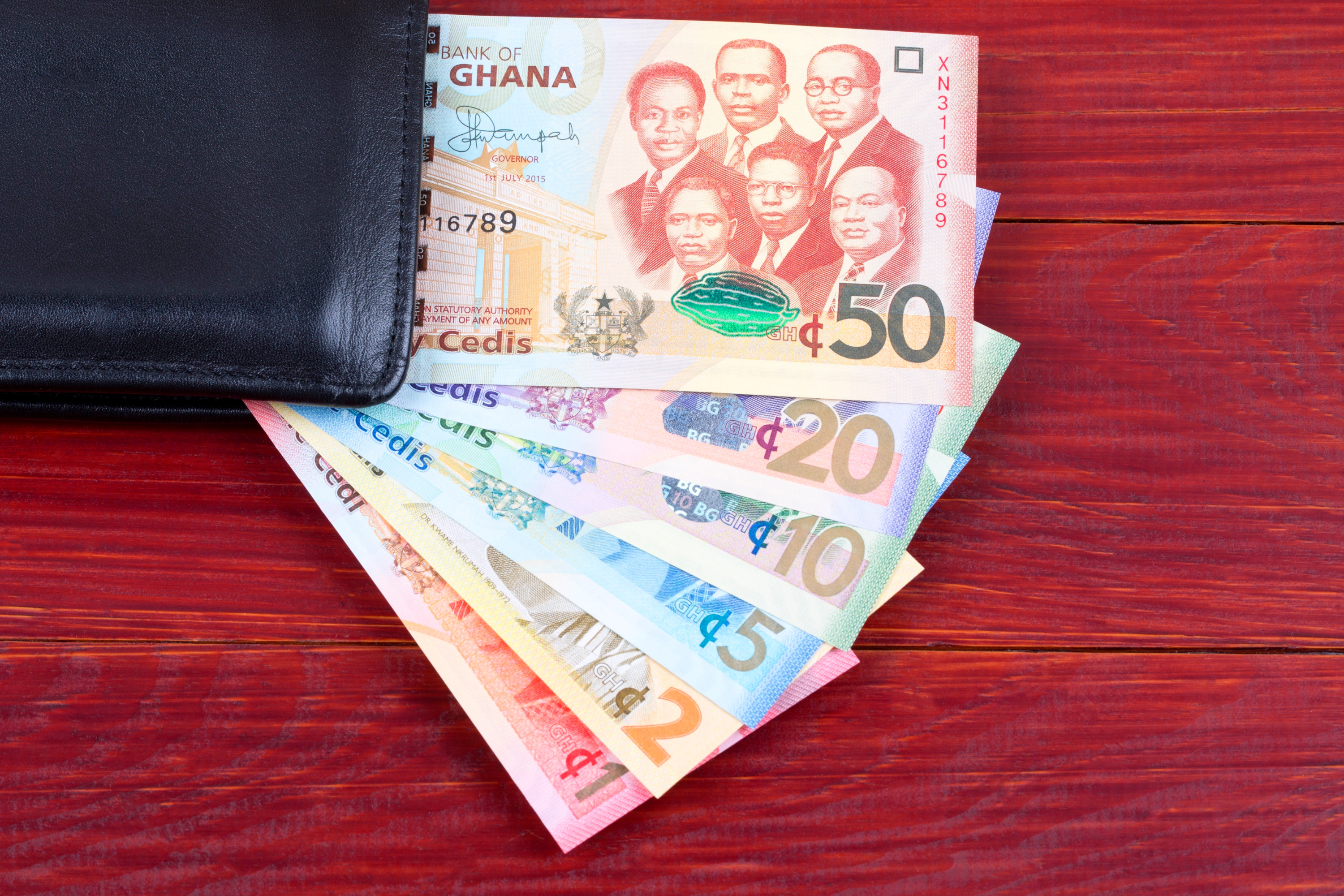
Ghanaian Cedis
After lunch, I headed to the streets of Tudu in the Accra Metropolitan District. I chose Tudu because it’s home to the shuttle terminal for Aflao, a bustling town on the border with Togo. Although I wasn’t done exploring Accra, I needed to figure out how to get to Togo—and, if necessary, secure a ticket in advance.
With my exit plan in place, I strolled around Tudu and felt the heartbeat of the community. The first thing that struck me was how passionate young boys are about soccer. Across Africa, soccer is the most popular sport. From grass pitches to dusty, uneven grounds, children play anywhere—often barefoot—with improvised goalposts.
Playing isn’t just fun; it’s crucial for a child’s development, contributing to their cognitive, physical, social, and emotional growth. The United Nations High Commission for Human Rights recognizes play as every child’s right.
Scenes of boys immersed in their favorite game are common throughout Accra, and their raw talent is remarkable. If I were a scout, I might have discovered the next Lionel Messi. With Africa’s growing exposure in the global soccer scene, it’s only a matter of time before the continent dominates the sport.
Take Komi Osei, a 13-year-old prospect with dreams of playing professionally in Europe. A devoted Paris Saint-Germain fan, he envisions the day he will wear Ghana on his chest and shine on the world’s biggest stage—the World Cup. “My generation will make Africa proud,” he told me.
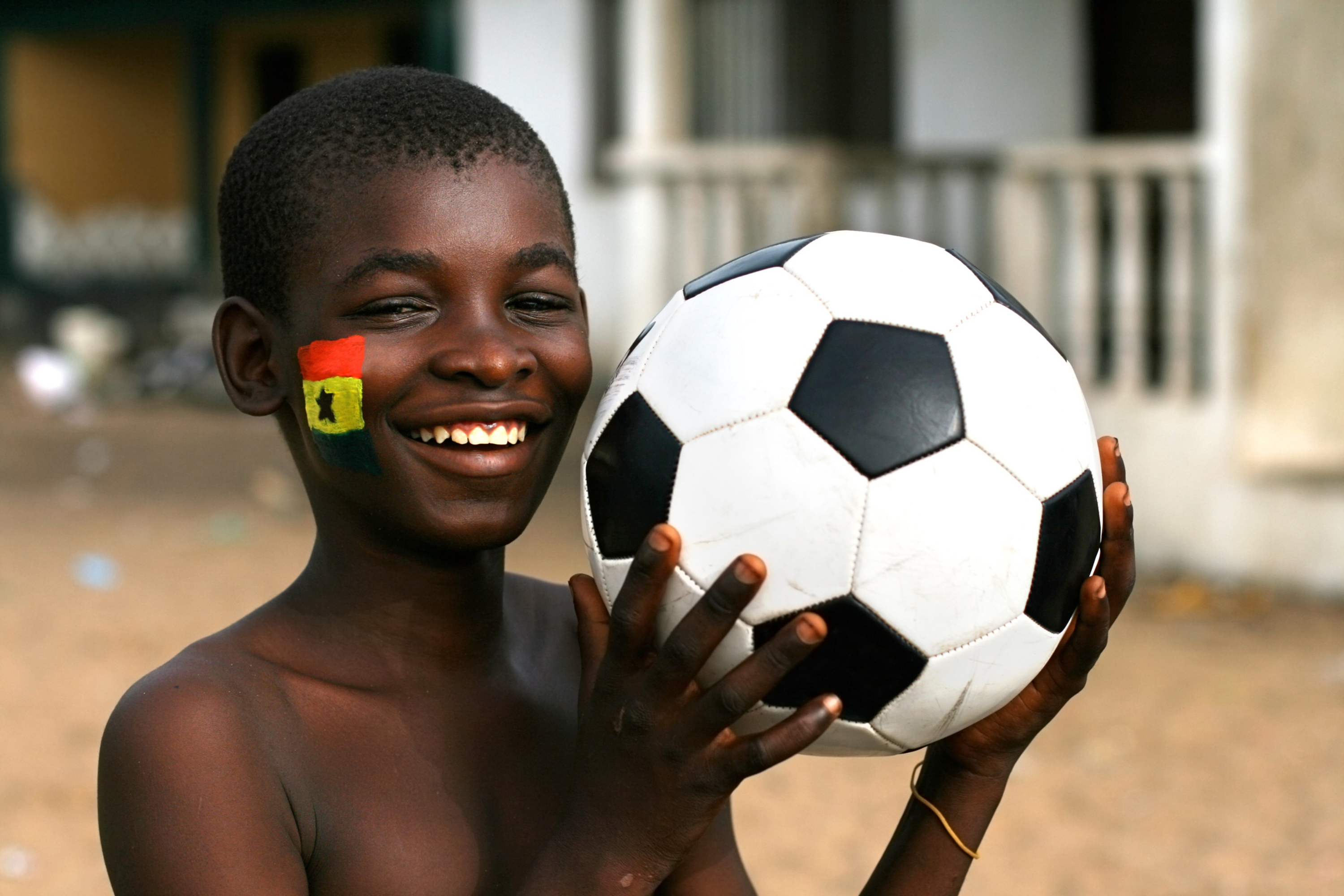
Ghanaian kids dream big