Inside Fort Jesus: A Journey Through Mombasa's Layered History
Two days before I set foot inside Fort Jesus, I saw it from the ocean.
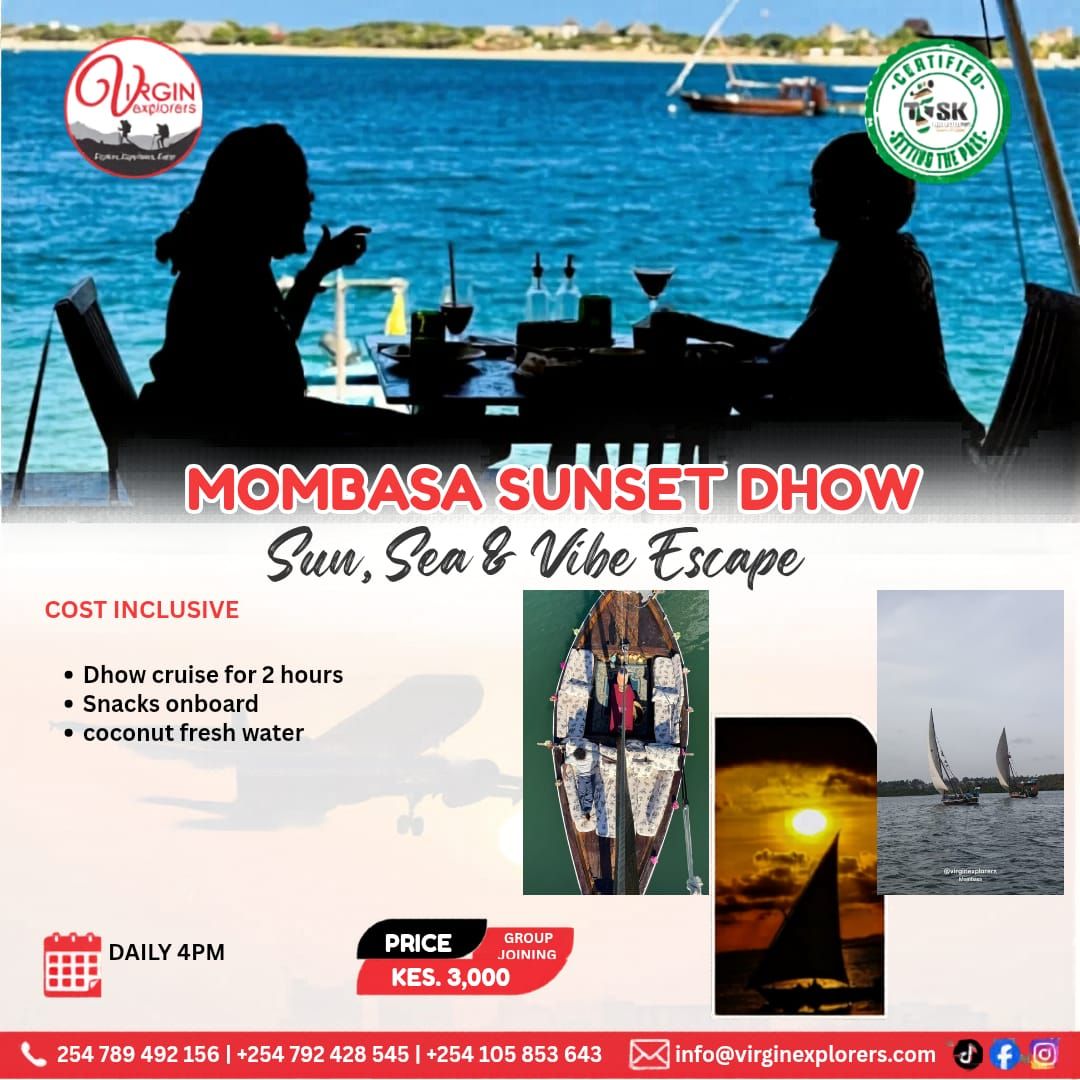
It was during a sunset dhow cruise with Virgin Explorers, the kind of slow evening where the sky melts into the Indian Ocean and everything feels unhurried. Then, out on the horizon, something caught my attention: a weathered seafront structure lined with cannons pointing outward like silent guardians.
I didn’t even know what I was looking at.
Curiosity took over, and I raised my binoculars for a better view.
What I saw didn’t quite belong to the present. It felt like a glimpse into another century.
"What is that?” I asked my guide, pointing toward the building.
“Fort Jesus,” he replied calmly.
Coincidentally, I was already scheduled to visit the place on my final day in Mombasa.
That night in my hotel room, I found myself thinking about it again. I decided not to read anything about the site before my visit. Sometimes, I prefer showing up with no prior knowledge and let the place speak for itself.
Of course, I wouldn’t be starting completely from zero. I only knew it had something to do with Portuguese occupation, and somewhere in the back of my mind, I suspected Vasco da Gama might appear in the story.
I was right.
When the day finally came, I woke up at 6 a.m. Like every other morning I spent in Mombasa, I kicked off the day with an invigorating barefoot jog along the beach. The sand was cool, the ocean calm, and the city still half asleep.
And then, at 8 a.m., I walked through the entrance of Fort Jesus, guided by a knowledgeable historian from Virgin Explorers.
The transition was immediate.
It didn’t feel like entering a mere building. It felt like stepping into a distant past.
The first thing I discovered after walking in was that the fort wasn’t built in the usual way. It had been carved directly out of coastal coral stone.
I thought about the effort behind it--locals providing the manpower, the sheer scale of labor involved. In my mind, I couldn’t help but compare it to the pyramids. Different structures, same weight of human effort, and both leaving behind landmarks that have stood the test of time.
Inside, history doesn’t sit quietly. It layers itself in voices.
Portuguese ambition. Arab trade routes. British control. Mombasa’s position as a coastal gateway that made it both prized and contested across centuries. Everything seemed to converge here--movement, power, exchange, and conflict.
In the beginning of the tour, Vasco da Gama’s name naturally surfaced, connecting East Africa to the wider web of exploration.
But what stayed with me most was not just what was said; it was what the place made me feel.
Because learning here is not passive.
It confronts you.
It pulls you into the darker chapters of mankind: slavery, colonialism, and displacement. These historical accounts suddenly feel closer when you are standing inside the very walls that once witnessed them.
Before leaving, I walked toward one of the cannons overlooking the ocean. I leaned in, almost instinctively, and peered through it like a lens.
Through that narrow frame, I saw ships moving toward the port.
Two days earlier, I had seen the fort from the ocean while our dhow drifted past its walls, cannons silently aimed in our direction. In that moment, I had felt exposed, almost vulnerable under their gaze.
Now, I stood on the other side. Looking out through those same cannons at the vessels below, I understood the shift in perspective. From here, everything changed. What once felt threatening now revealed its logic. I felt the quiet invincibility that comes with strategic positioning.
When I finally walked out of the door, my perspective felt broader. Not just on Mombasa’s past, but on its place in the world.
It felt like I had just stepped out of a time machine.
One moment I was deep inside layers of history, each one heavier than the last, pressing on my mind as if I had actually lived through them. Then suddenly I was back in the present.
On my way out, I carried the weight of what I had just moved through. For a while I just stood there, trying to reconcile where I was with what I had seen. It felt like the present needed a moment to catch up with me.
And perhaps that is what makes Fort Jesus more than just a historical site. It is not simply a place to observe history. It is a place that quietly places you inside it.
By the time I stepped back into the streets of Old Town, Mombasa felt different.
Not because it had changed.
But because I had.